
 Login / Signup
When Does a Collated Attachment Pay for Itself?
Jul 31, 2026
When Does a Collated Attachment Pay for Itself?
The Loose Screw Leak: Where Drywall Labor Margins Slip Away
By: Michael Alarcon
Put yourself on a long commercial corridor layout. A high-production hanger reaches into their pouch, fumbles a loose screw, spins it onto a magnetic bit, stabilizes the board, and drives it home. It takes maybe four to five seconds per screw. Along the way, a few drop into the floor dust, never to be seen again. It looks like standard operating procedure, but if you look closer, you are witnessing a massive cash leak.
In commercial drywall contracting, your biggest line item isn't material, it’s labor. When your hangers spend hundreds of combined hours repeating that reach-fumble-load cycle across a multi-story deck, you aren't just losing screws; you’re actively burning your profit margin. This is where a collated screw attachment shifts from an expensive tool luxury to a critical margin-protection asset. The hesitation to adopt collated systems almost always boils down to a single question: Why pay double for a plastic-bound strip of screws when a bulk box of loose fasteners is so cheap? The answer is simple: you don't look at the cost of the steel; you look at the cost of the clock.
■ The Pure Math: Production Speeds Compared
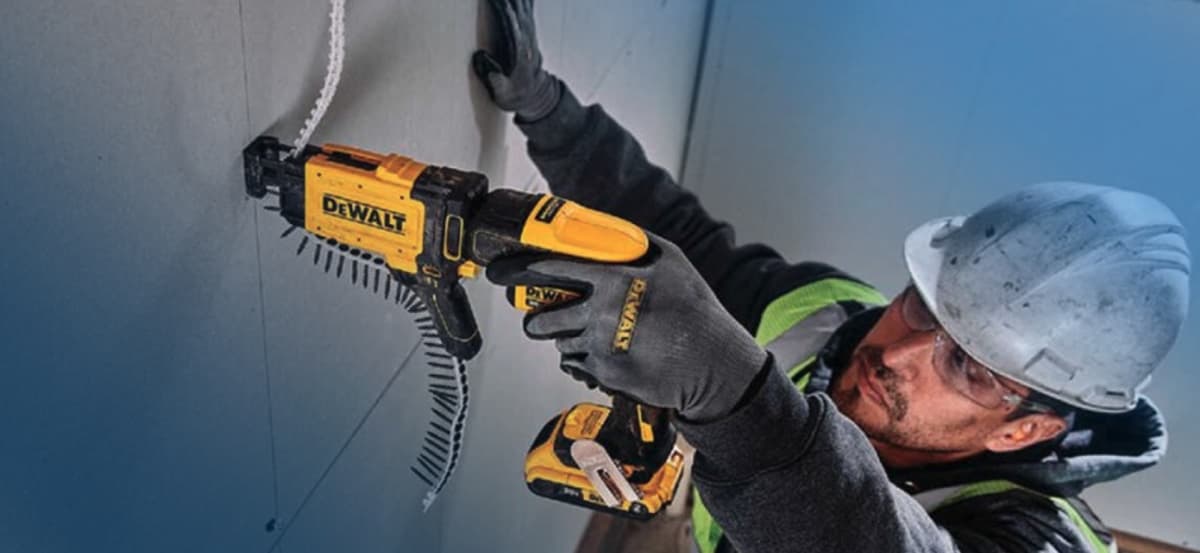
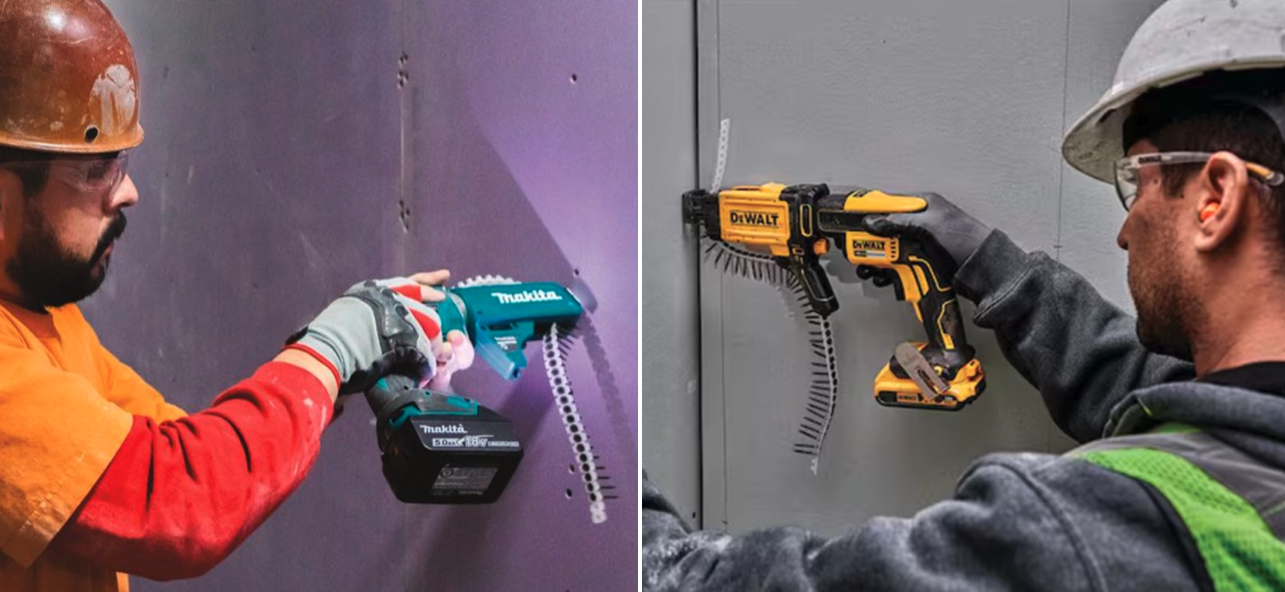
To understand when a collated system, such as DEWALT’s Collated Drywall Screw Gun Attachment, pays for itself, you have to run the hard, field-tested math on installation velocity.
-
The Loose Fastener Cycle: A skilled hanger using loose screws can realistically drive roughly 20 to 30 screws per minute. That rate plummets as fatigue sets in later in the shift, or when working overhead on stilts and scaffolding where balancing a loose fastener becomes a circus act.
-
The Collated Fastener Cycle: An auto-feed collated attachment completely eliminates the manual loading step. The tool operates on a continuous strip, allowing a hanger to drive up to 60 to 75 screws per minute without ever taking their hand off the tool's grip.
By doubling or tripling your fastening speed, a collated system alters the entire project timeline. On a massive commercial layout requiring tens of thousands of fasteners, that structural jump in speed turns a two-day hang into a one-day hang. If you’re saving eight hours of labor per man on a large crew, the upfront cost of the collated gun and the slightly higher premium on the strips is completely wiped out and paid for before the first week of production is even finished.
■ The Tipping Point: Identifying the High-ROI Scenarios
While the math is clear, collated attachments are not a magic bullet for every single scenario. To maximize your tooling return on investment (ROI), you need to know exactly where to deploy them, and where to leave them in the gang box.
-
Deploy It: Long-run commercial partitions, expansive ceiling grids, dense multi-family demising walls, and heavy-gauge structural steel framing. Anywhere your crew can walk a straight line and drive hundreds of continuous, repetitive fasteners is where the auto-feed system builds massive distance over loose screws.
-
Leave It: Intricate tenant fit-outs, complex drywall soffits, or tight radius partitions. If your hangers are spending more time measuring, cutting board, and repositioning scaffolding than they are actually driving screws, the time saved by a collated gun will be diluted by the layout's complexity.
■ The Hidden Savings: One-Handed Control and Zero Drop Waste
The financial business case for collated attachments, like Mikita’s Collated Auto Feed Screwdriver Magazine extends far beyond raw speed. There are massive operational side-benefits that directly impact your final punch list:
-
True One-Handed Operation: Because hangers don't need a free hand to feed a loose screw to the bit, they keep that hand free to press the drywall firmly against the metal stud. This extra leverage ensures the board seats perfectly flush, dramatically reducing the number of screws that drive crooked or fail to countersink, which saves your finishing crew from tedious hand-setting later.
-
Advanced Ergonomics: Utilizing collated guns with extension poles removes the physical toll of constant overhead reaching or crawling on knees for track fastening. Lowering late-day physical fatigue keeps production rates steady from 7:00 AM to quitting time, while simultaneously mitigating costly worker's comp liabilities.
-
Zero Material Waste: Every loose screw that slips out of a pouch and hits the floor is swept up into a construction dumpster. Collated strips keep 100% of your purchased fasteners organized, intact, and driven straight into the stud.
■ Maximizing Your Tooling ROI: Keeping the Hangers Moving
Upgrading to a high-production collated system only works if your supply chain can keep up with the speed of your crew. If your hangers run through screws twice as fast but have to stand around waiting on the exact strip type they need for the steel gauge on site, your labor margin vanishes instantly. Maximizing your tooling ROI requires syncing your bulk material drops with your fastener counts. Giving your crew the continuous ammo they need is the only way to outrun the clock and lock in your hard-earned margin.