
 Login / Signup
Don't Wear Your Tool Belt Until It Has These 5 Essentials
Jun 9, 2026
Don't Wear Your Tool Belt Until It Has These 5 Essentials
By: Michael Alarcon
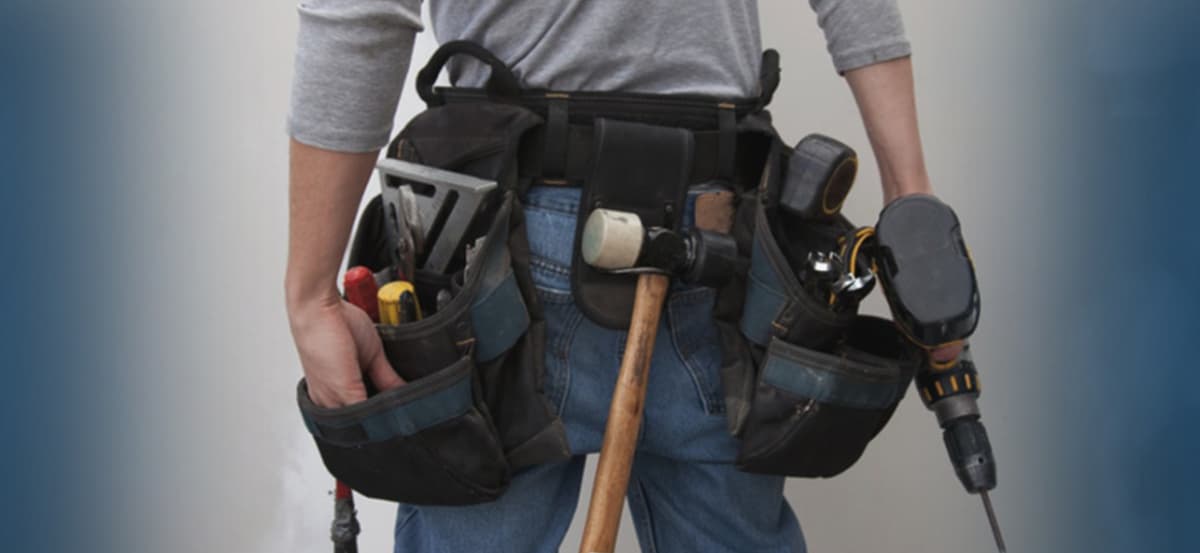
A tool belt is the most personal piece of equipment you can own. It isn’t just a heavy leather strap; it’s a customized workspace that relies on muscle memory and ergonomic efficiency. When you’re mid-task, your eyes should never leave the measurement you’re holding or the material you’re bracing. Your hands should simply know where the weight is. While every trade has its specialized kit, there are five "universal constants"—the high-performance essentials that turn a standard belt into a precision system. These aren't just accessories; they are mechanical solutions to the daily friction of building.
■ 1. The High-Stiffness Tape Measure
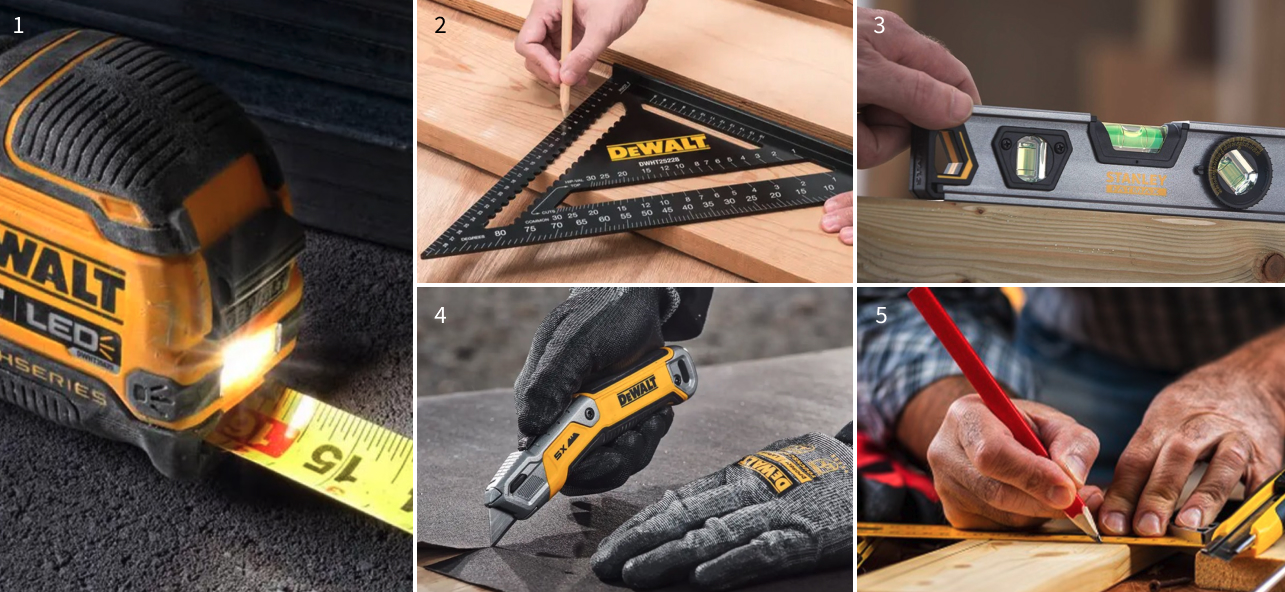
A tape measure is a study in physics and material tension. The "retail" versions often suffer from a short "standout," meaning the tape collapses under its own weight before you can reach across a room.
-
The Logic: Look for a tape with a 13-foot standout and a wide, high-visibility blade.
-
The Detail: Notice the "hook" at the end has a slight amount of play. This isn't a manufacturing defect; it’s an engineered feature called "true-zero." The hook moves just enough to account for its own thickness, ensuring your measurement is accurate whether you are "hooking" onto an edge or "pushing" the blade against a wall.
■ 2. The Speed Square
If you only have room for one layout tool, the speed square is the undisputed heavyweight. It is a 7-inch triangular frame that replaces a dozen other specialized tools.
-
The Logic: Beyond marking a perfect 90° or 45° angle, it acts as a structural fence for a circular saw. By holding the square against the board, you create a physical guide that ensures every cut is perfectly square, removing the "guesswork" of freehanding.
-
The Detail: Look for a version with deep-stamped "Scribe Bar" notches. These allow you to drop a pencil into a notch and slide the square down a board, creating a perfectly parallel line for rip cuts.
■ 3. The Torpedo Level
The torpedo level is a pocket-sized powerhouse that solves the problem of "true" orientation in tight spaces where a standard four-foot level won't fit. It relies on the absolute consistency of gravity and surface tension to tell you exactly where the earth's center is in relation to your project.
-
The Logic: Inside the vial, a bubble of air is trapped in a liquid (usually ethanol) because the air is less dense than the fluid; as gravity pulls the liquid to the lowest possible point, the air is forced to the highest point, creating a perfect visual indicator of "level."
-
The Detail: The heavy-duty aluminum frame provides the rigid "true edge" needed for accuracy, while a magnetic base allows for hands-free work on metal pipes or studs, essentially turning the tool into a fixed reference point for the invisible laws of physics.
■ 4. The Quick-Change Utility Knife
The blade is the most-used tool in the belt, but a dull blade is a primary safety hazard. If a tool requires a screwdriver and five minutes to change a blade, you’ll likely keep using a dull one far too long.
-
The Logic: Opt for a tool-less quick-change model.
-
The Detail: High-spec utility knives often feature an integrated "gut hook" or a wire-stripping notch. This allows you to perform specialized tasks—like cutting twine or stripping a lead—without even fully extending the blade, keeping the sharp edge protected and your hands safe.
■ 5. The "Non-Bleed" Carpenter's Pencil
It sounds basic, but the humble pencil is the foundation of every cut. The flat shape isn't just a tradition; it’s a design feature that prevents the tool from rolling away on an inclined roof or a vibrating workbench.
-
The Logic: Standard office pencils are too soft. You want medium-hard lead that won't smudge on damp lumber or "bleed" under a coat of paint.
-
The Detail: Pair it with a dedicated belt-mounted sharpener. While using a utility knife to sharpen a pencil is a classic move, a dedicated sharpener produces a consistent, needle-sharp point for "zero-tolerance" measurements that a knife-cut point can't match.
The Bottom Line
Efficiency isn't about working faster; it’s about moving less. When these five essentials are indexed in your belt, you stop "searching" and start "executing." Every one of these tools represents a small piece of engineering that, when combined, makes the entire build feel effortless. Is your kit up to spec? Search MyFBM for high-standout tapes, aluminum speed squares, and professional-grade utility knives to build your ultimate tool belt today.